“The research shows that the type of content you produce is different whether you handwrite or type,” says Ken Hinckley, an interface expert at Microsoft Research who’s long studied pen-based electronic devices. “Typing tends to be for complete sentences and thoughts—you go deeper into each line of thought. Handwriting is for short phrases, for jotting ideas.” This makes intuitive sense – it’s why people like to brainstorm using whiteboards rather than Word documents.
Others have pointed out that notebooks have an immediate tactile advantage over phones: they aren’t connected to the Internet. It’s intimate in a way computers aren’t. A notebook is the written equivalent of a face-to-face meeting. It has no distractions, no pop-up icons, and no software upgrades. It’s no wonder that a key desktop brand reminder is a notebook.
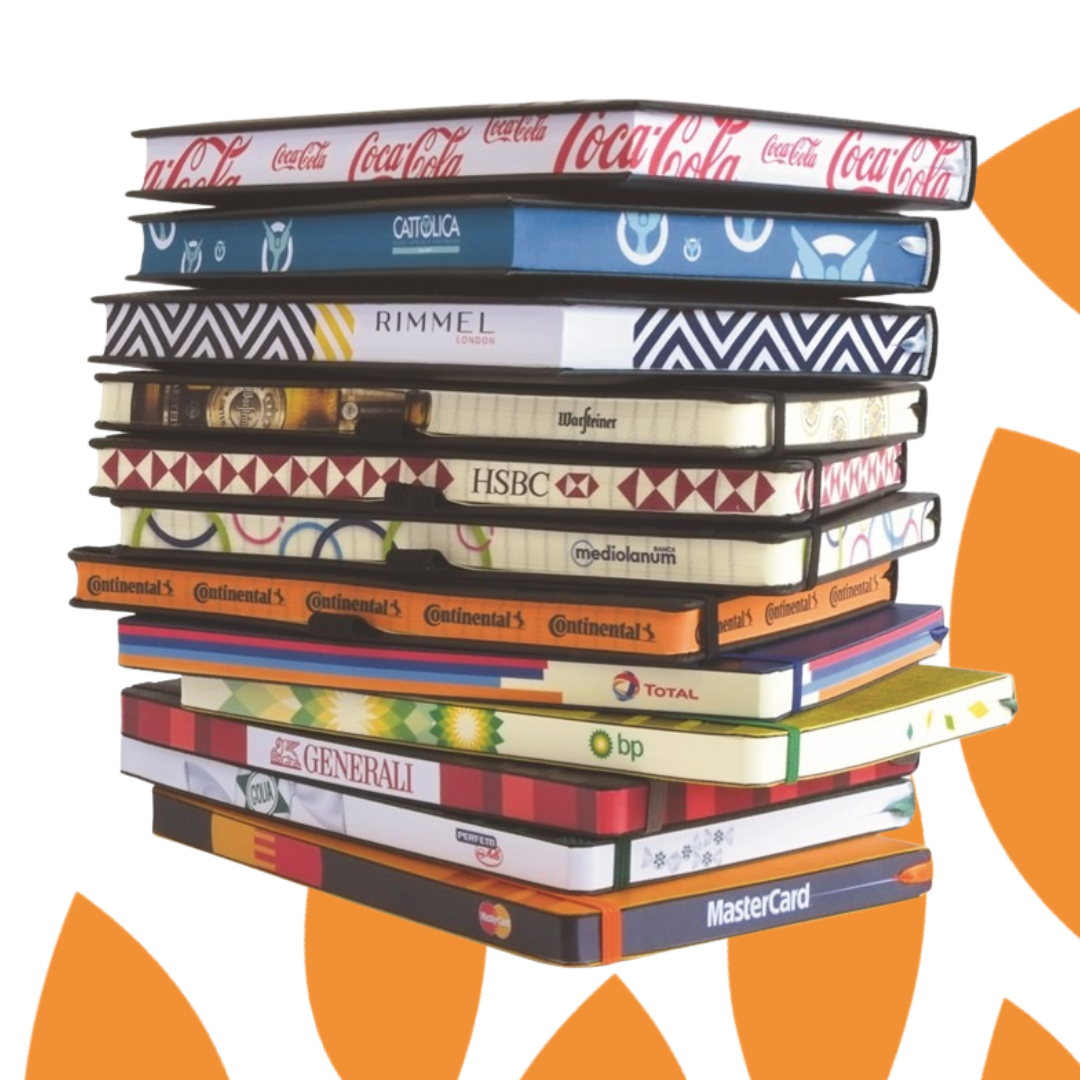
The options are endless for the simple notebook – now we can digitally print on the edges of the notebook offering a brilliant branding option; we can vary the cover materials from velvet to eco friendly and leather; we can add digitally printed pages throughout; and add pockets at the back.
Talk to us about the wide range available.
Moleskin digital
 The perfect merge between writing and digital, moleskin (and others) have beautiful notebooks with digital pens that transfer the data you write with the pen to your device – ready to be added to and adapted as required.
- You still have the notebook to refer back to as a reference.
Fabric notebooks
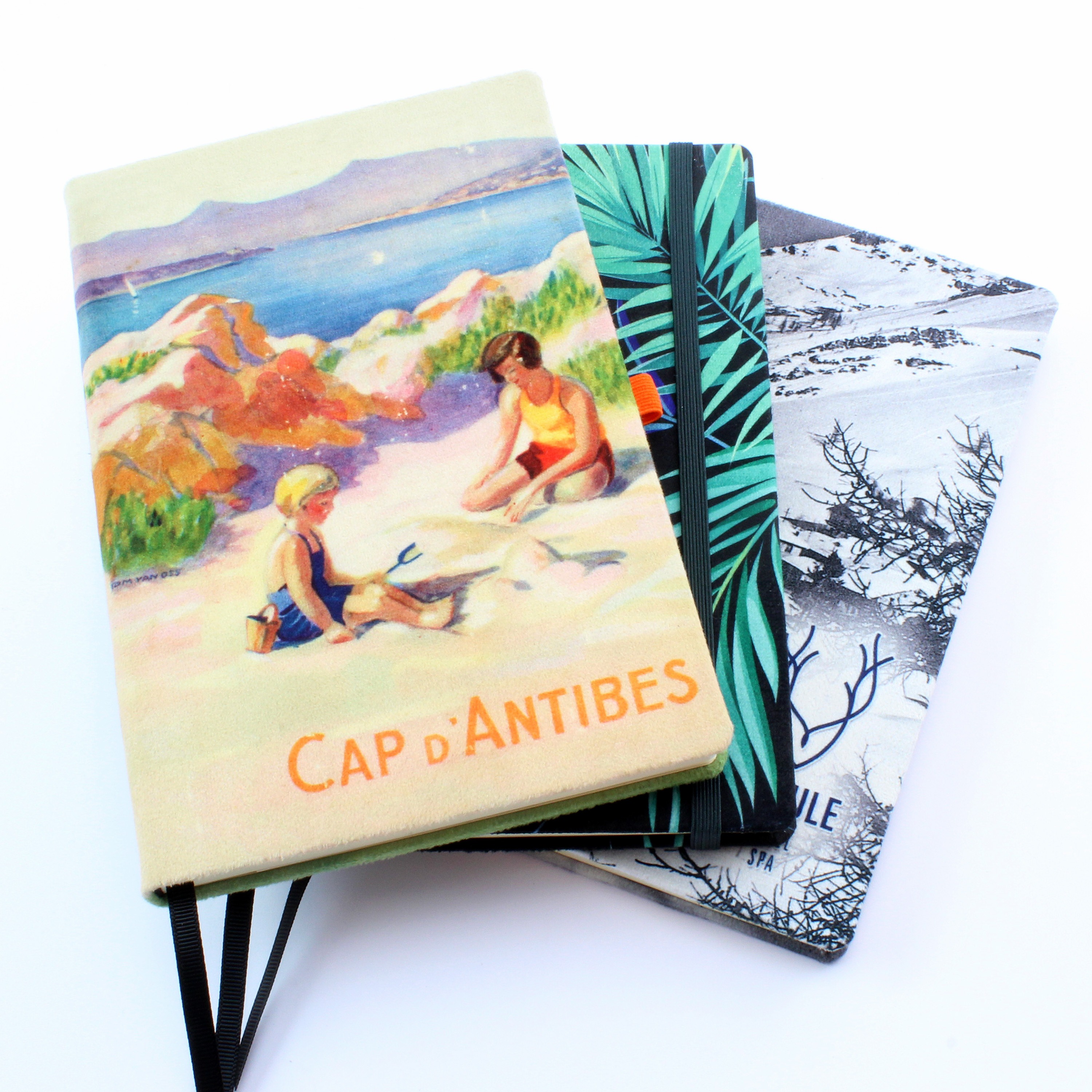
- Many fabrics can be used on the cover of notebooks; leather, paper, bamboo, wood, stainless steel – and now velvet.
- A lovely soft touch, very tactile finish with a full colour print.